AVVNL Net Metering for Rooftop Solar in Rajasthan: Consumer Checklist
If your home or small business electricity bill falls under AVVNL, rooftop solar approval depends on the correct DISCOM selection, technical feasibility, registered vendor installation, net meter work and subsidy documentation. This Rajasthan checklist explains the sequence before you approve a solar quotation.
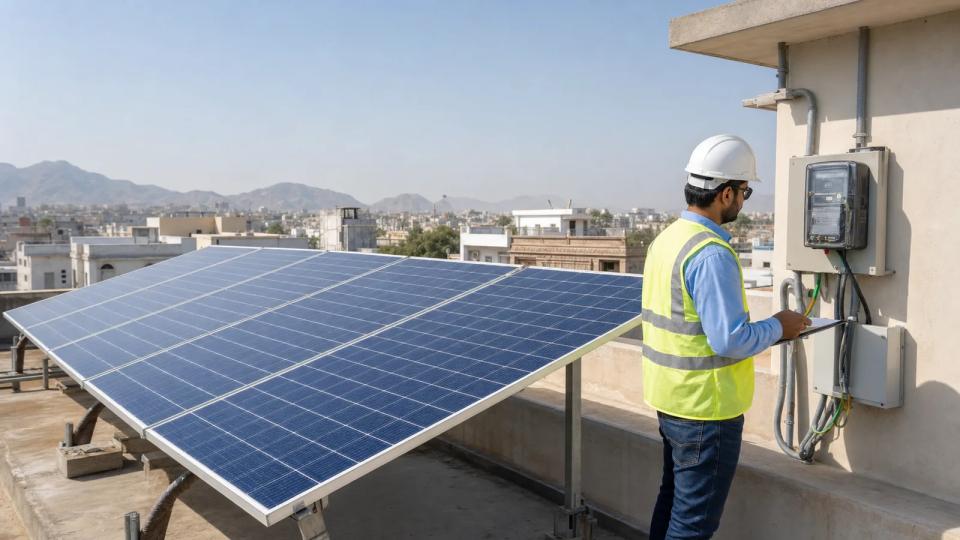
Direct answer: If your electricity connection is under AVVNL, apply for rooftop solar through the official PM Surya Ghar/National Portal route with the correct Rajasthan DISCOM and consumer number. Wait for AVVNL technical feasibility, use the approved vendor process, complete installation and net meter inspection, then submit subsidy and commissioning details as required.
Last reviewed: 23 June 2026. This guide is for AVVNL-area rooftop-solar consumers in Rajasthan. Final eligibility, capacity, net-metering and subsidy status must be verified from your current electricity bill, official portal status and DISCOM approval.
Key takeaways
- AVVNL consumers should not choose JVVNL or JDVVNL by mistake on the rooftop-solar portal.
- The electricity bill, consumer number, sanctioned load and subdivision details should be checked before a quotation is finalised.
- PM Surya Ghar subsidy for eligible residential consumers is subject to scheme rules, DISCOM feasibility, compliant installation and inspection.
- Net metering is not only a meter change; it depends on approved capacity, grid connection and commissioning records.
- A site survey should confirm roof area, shadow, structure safety, inverter location and meter access before payment.
Who should use this AVVNL checklist?
Use this checklist if your bill is issued by Ajmer Vidyut Vitran Nigam Limited, commonly written as AVVNL or AVVNL Ajmer DISCOM. Consumers in rooftop solar installation in Ajmer, rooftop solar installation in Udaipur, Bhilwara and nearby AVVNL-served areas should still confirm the DISCOM name from the bill. City names alone are not enough because Rajasthan has multiple distribution companies.
If your connection is under Jaipur Vidyut Vitran Nigam Limited, read the separate JVVNL net metering checklist. The broad solar logic is similar, but the DISCOM selection, subdivision office and local processing path should match the bill.
AVVNL rooftop solar process at a glance
| Step | What to verify | Why it matters |
|---|---|---|
| 1. Bill check | Consumer number, name, address, sanctioned load and AVVNL subdivision. | Wrong consumer or DISCOM details can delay feasibility and subsidy records. |
| 2. Roof survey | Usable roof area, shadow, access, structure, meter location and inverter space. | The correct system size depends on the site, not only monthly units. |
| 3. Portal application | Rajasthan state, AVVNL DISCOM, consumer number and applicant details. | The official route links your application with DISCOM technical feasibility. |
| 4. Feasibility approval | Approved capacity, grid connection conditions and any DISCOM remarks. | Installation should not exceed approved capacity without correction. |
| 5. Installation | Registered vendor process, compliant modules/inverter, safe structure and wiring. | Subsidy and net meter records depend on compliant completion. |
| 6. Net meter and commissioning | Meter replacement/testing, inspection, commissioning report and bank details. | Subsidy settlement should be pursued only after successful commissioning. |
How PM Surya Ghar subsidy applies in AVVNL areas
The PM Surya Ghar scheme is a central residential rooftop-solar programme. PIB/MNRE explains the CFA formula as 60% of solar unit cost for systems up to 2 kW and 40% of additional system cost for systems between 2 kW and 3 kW, capped at 3 kW. At current benchmark prices described by PIB, this means Rs 30,000 for 1 kW, Rs 60,000 for 2 kW and Rs 78,000 for 3 kW or higher.
| Residential system size | Current central CFA reference | Important caution |
|---|---|---|
| 1 kW | Rs 30,000 | Check if 1 kW is enough for your actual bill and roof plan. |
| 2 kW | Rs 60,000 | Suitable for many smaller homes, subject to consumption and roof area. |
| 3 kW or more | Rs 78,000 cap | Extra capacity above 3 kW does not increase the central CFA under this reference. |
Do not treat subsidy as guaranteed. Eligibility, application correctness, technical feasibility, vendor compliance, inspection and bank/subsidy records all matter. For a local quotation, compare the gross system price, expected subsidy, net cost, generation assumption and payback separately. NVH Solar's PM Surya Ghar subsidy in Rajasthan page explains the residential support flow, and the solar panel price in Rajasthan page helps compare system-size costs.
What AVVNL consumers should check before approving a quote
Is the system size matched to your sanctioned load and bill?
Start with the last 6 to 12 months of electricity units, sanctioned load and daytime consumption pattern. A 3 kW system may be attractive because of the current CFA cap, but a shaded roof, low daytime usage or limited sanctioned load may require a different design. A responsible quote should state assumptions rather than promising a fixed bill reduction.
Is the vendor handling DISCOM and net meter steps clearly?
Ask who will file the application, who will coordinate feasibility remarks, who will provide completion documents, and what is excluded. If the quote says “subsidy handled” but does not name the required customer actions, bank details, portal checks and DISCOM inspection dependency, the scope is incomplete.
Is the meter location accessible and safe?
Net meter work may require access to the existing meter, distribution board and cable route. In Rajasthan homes, meter positions can be inside narrow passages, shared walls or older service panels. Confirm the cable route, earthing, ACDB/DCDB placement, inverter wall and safe access before installation begins.
Common AVVNL rooftop solar mistakes
- Selecting the wrong DISCOM or entering an incorrect consumer number.
- Approving a quote before technical feasibility is clear.
- Comparing only panel wattage and ignoring structure, inverter, protection devices and AMC support.
- Assuming subsidy before installation, inspection and commissioning are complete.
- Installing more capacity than the approved feasibility or available roof safely supports.
- Not keeping screenshots, application numbers, payment proof, warranty records and commissioning documents.
Practical next steps for AVVNL consumers
- Keep your latest AVVNL electricity bill ready.
- Review monthly units, sanctioned load and roof access.
- Use the official portal route and select Rajasthan plus AVVNL only if the bill confirms it.
- Ask NVH Solar for a site survey before finalising capacity.
- Compare gross price, expected subsidy, net cost, inverter, structure, protection devices and service support.
- Track feasibility approval, installation completion, meter inspection and subsidy status separately.
For a capacity recommendation, rooftop solar for home in Rajasthan planning should include bill review, roof survey and DISCOM feasibility. You can also book a free rooftop survey with NVH Solar or call +91 9509344453.
Sources
- PIB/MNRE PM Surya Ghar scheme explainer, checked 23 June 2026.
- National Portal DISCOM information links, checked 23 June 2026.
- RERC regulations page, checked 23 June 2026.
FAQs
What is AVVNL net metering for rooftop solar?
AVVNL net metering is the billing and meter arrangement used when an eligible grid-connected rooftop solar system exports surplus electricity to the Ajmer Vidyut Vitran Nigam Limited network. The consumer should apply through the official rooftop-solar route, wait for DISCOM feasibility approval, install through the approved process and complete net meter commissioning before expecting subsidy settlement.
How do I know whether my house falls under AVVNL?
Check the electricity bill first. The bill, subdivision name, consumer number and DISCOM name should show whether the connection belongs to AVVNL. Homes in and around Ajmer, Udaipur, Bhilwara and other AVVNL-served areas should not assume the DISCOM from city name alone; use the bill and National Portal DISCOM selection.
Can I claim PM Surya Ghar subsidy in AVVNL areas?
Yes, eligible residential consumers in AVVNL areas can apply for PM Surya Ghar central financial assistance through the official portal, subject to scheme rules, technical feasibility, compliant installation and DISCOM inspection. The subsidy is not automatic and should not be treated as guaranteed before approval and commissioning.
Which system size should I apply for?
Start with electricity consumption, sanctioned load, usable shadow-free roof area and budget. A 3 kW system often attracts the full current residential CFA cap, but it is not correct for every home. NVH Solar should confirm the size after bill review, roof survey and AVVNL feasibility considerations.
What documents are usually checked for AVVNL rooftop solar?
Expect checks around the electricity bill, consumer number, applicant details, address, bank details for subsidy, roof ownership or consent, vendor quotation and installation completion information. Exact requirements can change on the portal or with DISCOM instructions, so verify the current checklist before uploading.
Can a commercial consumer use the same subsidy route?
PM Surya Ghar central financial assistance is for eligible residential rooftop solar consumers. Commercial and industrial AVVNL consumers can still evaluate rooftop solar, net metering or other regulatory options, but subsidy assumptions, metering rules and ROI calculations should be checked separately.
Conclusion
AVVNL rooftop solar is easiest to manage when the consumer bill, portal application, feasibility approval, installation scope and net meter process are aligned from the beginning. NVH Solar can review your bill and roof, recommend a system size and help you understand the AVVNL steps before you commit to the project.