Solar Panel Cleaning in Rajasthan: Dust, Heat and Monsoon Checklist
Rajasthan rooftops face dust, heat and pre-monsoon winds. This guide explains when to clean solar panels, what tools and water practices are safe, what to avoid, and when NVH Solar should inspect the system instead of a homeowner attempting DIY cleaning.
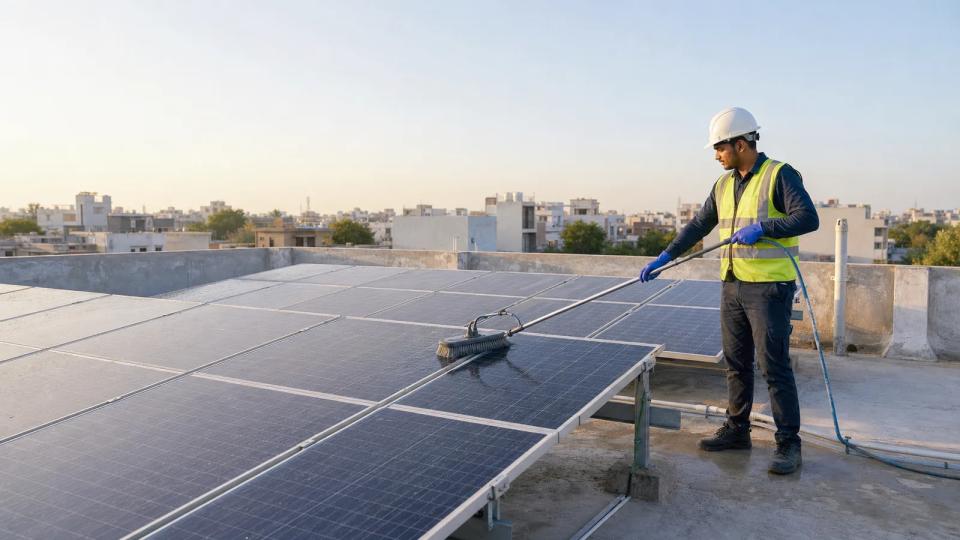
Direct answer: In Rajasthan, solar panels should be inspected after duststorms, visible soiling and pre-monsoon winds, then cleaned only with safe, low-abrasion methods. Avoid afternoon cleaning, harsh chemicals and high-pressure washing. If access, wiring or structure is unsafe, book a trained AMC inspection instead of attempting rooftop cleaning yourself.
Last reviewed: 13 June 2026. Author: NVH Solar Editorial Team. Technical reviewer: NVH Solar Technical Review.
Key takeaways
- Rajasthan rooftops face a practical mix of summer heat, dust, dry winds and pre-monsoon storms.
- Google autocomplete shows real user demand for "solar panel cleaning service Jaipur", "solar panel maintenance checklist" and "solar panel efficiency in heat".
- IMD's 9 June 2026 press release reported thundersquall risk for East and West Rajasthan during 11-13 June and duststorm risk over West Rajasthan during 11-13 June.
- Waaree's module manual says dust accumulation can reduce optimal output and recommends trained personnel, low-pressure water, soft cleaning tools and no aggressive chemicals.
- NVH Solar should inspect the system when there are inverter faults, loose cables, cracked glass, earthing concerns, storm movement or unsafe roof access.
Why panel cleaning matters before and during monsoon
June is a high-risk maintenance month for Rajasthan rooftop solar. The roof may have summer dust on panel glass, cable trays and drainage paths, while pre-monsoon wind can move loose objects and expose weak mounting or earthing points. A small visual check before heavy rain can prevent cleaning mistakes and help identify faults early.
This does not mean homeowners should climb onto a hot or wet roof. Rooftop solar is an electrical system. Cleaning is useful only when it is done without damaging glass, junction boxes, cables, clamps, earthing or waterproofing.
How dust, heat and rain affect output
Dust and dirt reduce the light reaching solar cells. Waaree's module manual specifically notes that dust and dirt can accumulate on module surfaces and reduce optimal output performance. Heat is a separate issue: solar modules are rated under standard test conditions, but real rooftop modules operate hotter than laboratory conditions. NREL research also discusses the importance of reducing operating temperature in PV modules.
Rain helps with loose dust, but it is not a full maintenance plan. Sticky deposits, bird droppings, mineral marks from hard water and debris around clamps may remain after light rain. In Rajasthan, a duststorm followed by brief rain can sometimes leave panels streaked instead of clean.
When should Rajasthan homeowners clean solar panels?
| Situation | Safer action | Why it matters |
|---|---|---|
| Visible dust layer after dry winds | Schedule early-morning or evening cleaning by trained personnel | Dust blocks light and can reduce output. |
| Panels are very hot in afternoon | Do not wash immediately; wait for dusk, dawn or a cooler surface | Waaree warns against large water-temperature differences and thermal stress. |
| Bird droppings or sticky deposits | Use soft tools and mild non-abrasive method; avoid scraping | Hard scraping can damage glass or coatings. |
| After thundersquall, storm or heavy wind | Book inspection before cleaning if mounts, cables or earthing may have shifted | Cleaning should not hide an electrical or structural fault. |
| Generation drops suddenly | Check inverter alerts and request AMC diagnosis | The cause may be shading, inverter fault, wiring, grid issue or soiling. |
Safe solar panel cleaning checklist
- Start with a visual check. Look for broken glass, loose cables, water pooling, damaged earthing and unsafe roof edges before any cleaning.
- Choose the right time. Manufacturer guidance recommends cleaning from dusk to dawn, when production is lower and shock and thermal-stress risks are reduced.
- Use low-pressure water. Do not use pressure washers. Waaree recommends low-pressure water close to the module temperature.
- Use soft, non-abrasive tools. A soft cloth, sponge or non-conductive soft brush is safer than hard scrubbing.
- Avoid harsh chemicals. Do not use aggressive abrasive cleansers, alkali-based chemicals, ammonia, hydrochloric acid, sodium hydroxide or similar solutions.
- Use suitable water. Waaree allows fresh water and notes TDS below 1500 mg/l; when detergent is needed, the final solution should be mild and in the 6.5 to 8.5 pH range at 25°C.
- Keep electrical safety first. Cleaning should be done by trained personnel who understand the risk of applying water around electrical components and who use appropriate PPE.
When cleaning is not enough
Cleaning does not repair system faults. If the inverter shows an error, generation falls sharply, the meter behavior changes, the roof has storm damage or the mounting structure moves, request a technical inspection. For homes, the next step is usually a bill review, inverter check and roof survey. For offices, schools, hospitals and factories, downtime and safety risk make planned solar AMC and O&M more important than one-off cleaning.
NVH Solar can connect the maintenance check with system sizing and savings review. Homeowners can compare expected generation with the solar calculator, while new projects should review rooftop solar for homes, on-grid solar systems and the Jaipur rooftop solar guide where relevant.
Practical next steps
- Photograph the roof, inverter screen and any visible panel soiling before calling for service.
- Share the last electricity bill and recent generation screenshot if monitoring is available.
- Ask whether the visit includes cleaning only, electrical inspection, earthing check, structure check and inverter diagnosis.
- Do not climb on wet roofs, weak roofs or roofs without safe access.
- Book a free rooftop solar site survey with NVH Solar or call +91 9509344453 for Rajasthan service support.
Source references
- India Meteorological Department press release dated 9 June 2026, accessed 13 June 2026: Rajasthan thundersquall and duststorm context for the maintenance timing.
- Waaree bifacial module installation manual, accessed 13 June 2026: PV module cleaning, water, chemical and PPE guidance.
- NREL technical paper on reducing PV module operating temperature, accessed 13 June 2026: heat and module operating-temperature context.
Conclusion
Solar panel cleaning in Rajasthan should be practical, not risky. Dust, heat and monsoon weather make maintenance important, but unsafe rooftop cleaning can damage panels or expose people to electrical hazards. Treat cleaning as part of a full rooftop solar health check.
NVH Solar can inspect the roof, panels, inverter, earthing and generation trend before recommending cleaning or AMC. Book a free rooftop solar site survey for a Rajasthan-specific recommendation.
FAQs
How often should solar panels be cleaned in Rajasthan?
There is no single fixed schedule for every roof. Inspect panels after duststorms, visible soiling, bird droppings or construction dust, and plan at least one trained maintenance inspection each year. Dusty or windy areas may need more frequent checks than sheltered urban roofs.
Can I wash solar panels during afternoon heat?
Avoid cleaning during generation hours or when panels are very hot. Waaree's module manual recommends cleaning from dusk to dawn and warns that water much warmer or colder than the module surface can create thermal stress.
What water and tools are safe for cleaning panels?
Use low-pressure water and a soft cloth, sponge or non-conductive soft brush. Waaree allows fresh water and, when needed, mild non-abrasive detergent within the stated pH range. Avoid hard scrubbing and aggressive chemicals.
Should a homeowner clean rooftop solar panels themselves?
A simple ground-level visual check is fine, but rooftop cleaning involves fall risk and electrical risk. Cleaning should be handled by trained personnel when access is unsafe, wiring is exposed, the roof is wet, or the system has faults.
Does rain clean solar panels fully?
Rain can remove loose dust, but it may not clear sticky dirt, bird droppings, mineral deposits near edges or debris around clamps. After a duststorm followed by light rain, panels may still need inspection.
When should I book NVH Solar AMC instead of only cleaning?
Book an AMC inspection if generation drops suddenly, the inverter shows faults, panels are cracked, cables are loose, earthing looks damaged, water pools near equipment, or the roof has storm-related movement.