Solar Panel Mounting Structure in Rajasthan: Wind, Roof and Safety Checklist
Rajasthan rooftops need solar mounting structures selected for wind, roof type, waterproofing, clearance, maintenance access and earthing. This guide explains what homeowners and businesses should verify before approving a rooftop solar quotation.
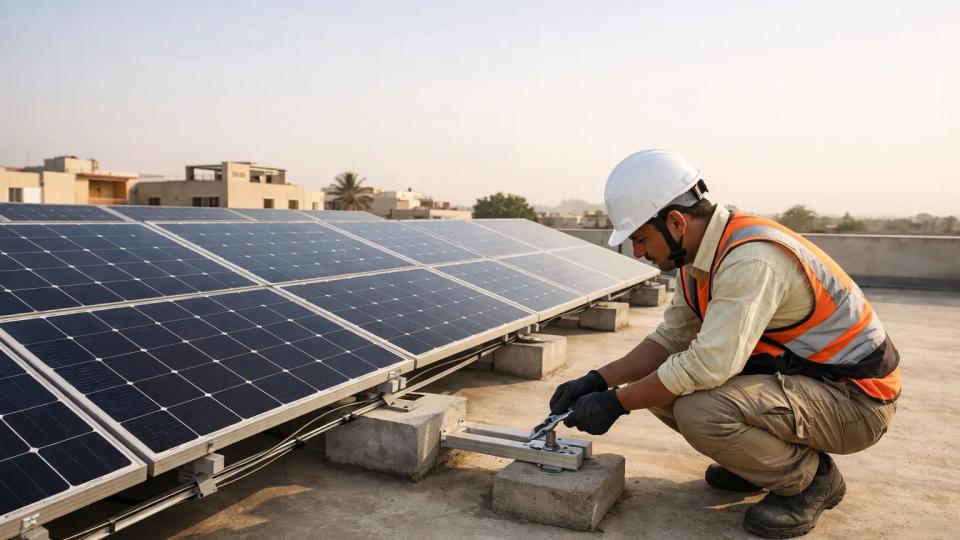
Direct answer: In Rajasthan, a solar panel mounting structure should be selected after checking roof type, wind exposure, structure material, fasteners, waterproofing, clearance, earthing and maintenance access. Do not approve a rooftop solar quote only because the panel stand price is lower; the structure protects the roof, the modules and the long-term safety of the system.
Last reviewed: 22 June 2026. This guide is for rooftop-solar decision making. Final structure design should be confirmed by a qualified solar engineer after a site survey.
Key takeaways
- The module mounting structure, or MMS, is a safety-critical part of a rooftop solar plant.
- Rajasthan roofs need attention to wind load, dust, heat, monsoon drainage and roof waterproofing.
- RCC flat roofs, tin sheds, elevated structures and carports require different mounting decisions.
- MNRE guidance asks designers to consider system weight, typical and maximum wind loads, seismic safety and Indian Standards.
- Ask for structure drawings, material specification, fastener details and earthing plan before approving the quotation.
Why mounting structure matters more than it looks
Solar buyers often compare panel brand, inverter brand and subsidy amount first. The structure is sometimes treated as a basic stand. That is risky. The mounting structure decides how panels sit on the roof, how wind is transferred to the building, how rainwater drains, how easily panels can be cleaned and whether electrical bonding is practical.
For Rajasthan homes, shops, offices and institutions, the same panel can behave very differently on a low RCC ballast frame, an elevated RCC structure, a tin shed, or a solar carport. NVH Solar should therefore inspect the roof before recommending rooftop solar for home in Rajasthan, commercial solar or carport design.
What does MNRE say about solar mounting structures?
The MNRE rooftop quality manual describes module mounting structures as the support used to secure PV modules in a chosen orientation. It lists structural considerations including the load of the PV system, typical and maximum wind loads at the location, seismic-zone safety factors and Indian Standards. The same guidance classifies rooftop structures into broad types such as ballast structures, tin-shed structures and RCC elevated structures.
IMD's 21 June 2026 press release adds timely Rajasthan context: thundersquall conditions were likely over East and West Rajasthan on 22 June 2026, and duststorm activity was likely over West Rajasthan on the same date. A daily solar article should not turn a weather forecast into fear marketing, but it is a useful reminder that wind and fixing quality cannot be ignored.
Which structure type fits which roof?
| Roof or use case | Typical structure approach | What to verify before approval |
|---|---|---|
| RCC flat roof | Ballast or RCC-supported frame, depending on loading and waterproofing needs | Roof strength, drainage, clearance, ballast weight, waterproofing, wind-load design and access path |
| Tin shed | Frame aligned with shed slope or calculated tilt | Purlin condition, sheet thickness, leakage risk, fastener compatibility, corrosion and roof access safety |
| Elevated RCC structure | Higher frame for usable roof space or shading clearance | Column/base plate design, bracing, wind load, stair/access safety and municipal/site constraints |
| Parking area | Solar Carport & Parking Systems | Vehicle clearance, foundation, drainage, lighting, cable route, maintenance access and commercial load pattern |
| Existing solar site | Inspection and retrofit only after engineer review | Loose bolts, corrosion, cracked blocks, water pooling, earthing continuity and module clamps |
Quotation checklist for Rajasthan buyers
Before approving a solar quote, ask the installer to explain the structure in plain language. A serious quotation for Home Solar in Rajasthan should answer these points:
- What roof type was assumed: RCC, tin shed, elevated frame or carport?
- What material is used: hot-dip galvanised steel, aluminium or another specified material?
- What member thickness, section size and fastener type are included?
- What is the wind-load basis for the city or site?
- Will the structure require roof penetration, chemical anchors, ballast blocks or RCC supports?
- How will waterproofing be protected after installation?
- What clearance is maintained for cleaning, heat ventilation and cable routing?
- Where are the structure earthing and lightning-protection connections planned?
- Who is responsible if vibration, leakage, corrosion or loose fasteners appear after installation?
Do not compare only solar structure price
Search demand around solar panel stand price and solar structure price is real, but price alone is a weak buying filter. A low-cost structure may use thinner material, poor coating, weak bolts, inadequate ballast or a design that makes panel cleaning difficult. These choices can reduce system life and create roof problems that cost more than the initial saving.
Use the solar savings calculator for generation and payback estimates, but treat structure cost as part of engineering quality, not as a disposable accessory. Any generation or savings estimate is indicative until roof shadow, orientation, usable area and structure feasibility are checked on site.
Maintenance checks after installation
A mounted solar array should be inspected periodically, especially after duststorms, strong wind, heavy rain or rooftop repair work. The inspection should include module clamps, rail alignment, ballast blocks, rust, vibration marks, cable ties, drainage, water pooling and earthing continuity. Cleaning alone is not a full structure health check. For existing systems, NVH Solar's Solar AMC and O&M in Rajasthan can combine cleaning, inverter checks and structure inspection.
Practical next steps
If you are planning rooftop solar in Jaipur, Jodhpur, Udaipur, Kota, Ajmer or another Rajasthan city, start with the roof survey, not the panel brand. Photograph the roof, note water tanks and shade, check whether the roof is RCC or tin shed, and ask the installer to mark structure placement before finalising capacity.
CTA: Book a free rooftop survey with NVH Solar or call +91 9509344453 to review the roof, structure type, safe access and solar capacity before approving the quote.
Sources reviewed
- MNRE Quality Control Manual for Grid Connected Rooftop Solar PV System.
- IMD Press Release dated 21 June 2026.
- MNRE Grid Connected Rooftop Solar Programme page.
- NVH Solar live service, calculator and contact pages checked on 22 June 2026.
FAQs
What is a solar panel mounting structure?
A solar panel mounting structure, also called MMS, is the metal support system that fixes solar modules to an RCC roof, tin shed or elevated frame. It controls tilt, clearance, wind resistance, maintenance access and long-term roof safety.
Which mounting structure is best for Rajasthan rooftops?
There is no single best structure for every Rajasthan roof. RCC flat roofs, tin sheds, carports and elevated roofs need different designs. The safer choice is the one engineered for the site wind zone, roof loading, waterproofing, access and earthing path.
Should I choose a solar structure by lowest price?
No. A low structure price can hide thinner members, poor galvanising, weak fasteners, roof leakage risk or missing design calculations. Compare material grade, member thickness, fasteners, drawings, wind-load basis, warranty and installer accountability before price.
How much clearance should solar panels have from the roof?
MNRE guidance includes different clearances by roof type. Ballast structures mention 70-150 mm, tin-shed structures more than 100 mm from the lowest point, and RCC flat-roof guidance also discusses higher clearances for ventilation and maintenance. The final clearance should be site-designed.
Does a rooftop solar structure need earthing?
Yes. MNRE guidance says separate earthing must be provided for the solar array structure, inverter and lightning arrestor. Structure earthing is important for electrical safety, lightning risk reduction and stable protection-device operation.
Can panels be installed on a tin shed in Rajasthan?
Yes, but the shed needs a structural check. The design should follow the shed slope or a calculated tilt, connect correctly to purlins, avoid leakage, provide safe clearance, and use compatible fasteners. Weak or corroded sheds should be reinforced before solar installation.
Conclusion
The safest solar mounting structure for Rajasthan is the one matched to the roof, wind exposure, access, waterproofing and earthing plan. A cheaper panel stand can become expensive if it damages the roof or makes maintenance unsafe. Ask NVH Solar for a site-specific structure recommendation before finalising rooftop solar.